
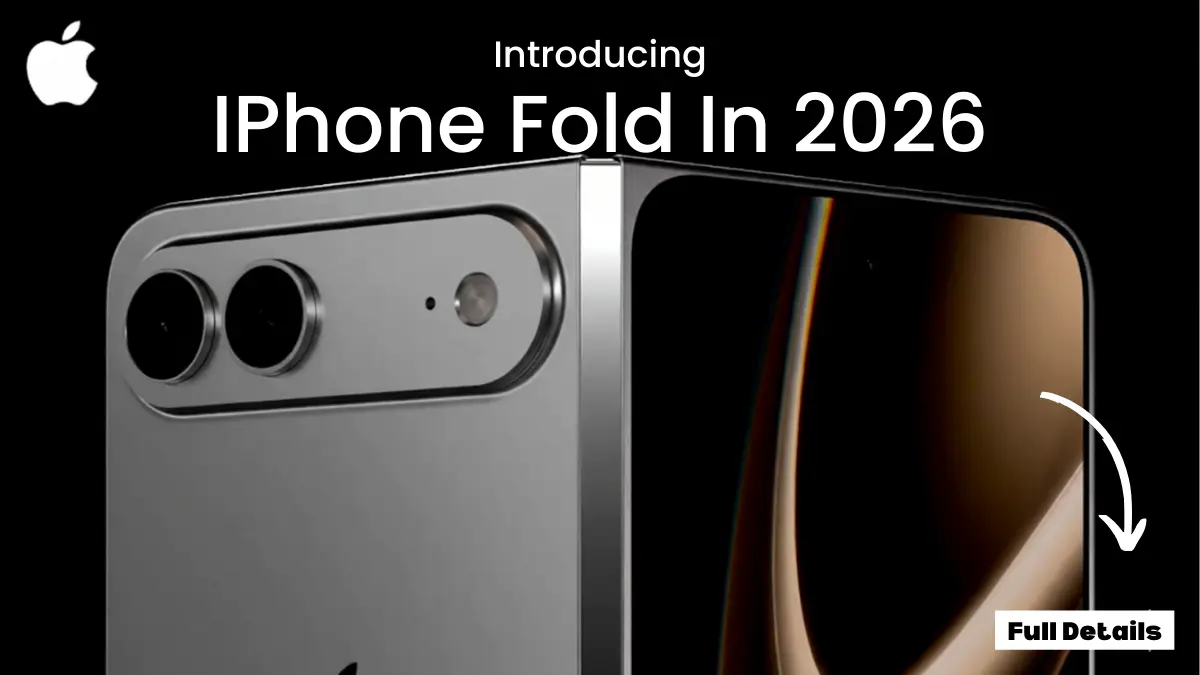
iPhone Fold 2026 : Dropping jaws in September 2026 alongside iPhone 18 Pro line up, Apple’s first-ever foldable beast dubbed iPhone Fold storms the premium arena as a crease-vanishing, titanium-clad revolutionary slashing Galaxy Z Fold 6 into shadows with its invisible-crease 7.8-inch inner canvas and brutally sharp 5.5-inch outer panel wrapped in liquid-metal hinge wizardry that Samsung engineers can only dream about.
Priced astronomically between Rs 1,65,000–Rs 2,07,000 ($2,000–$2,500), this book-style titan demolishes foldable norms with A20 chip firepower, 48MP dual cameras ditching Face ID for side-button Touch ID, and a monster 5,800mAh cell initial 6-8 million units targeting loyalists who’ll mortgage kidneys for Apple’s belated yet brutally polished foldable dominance over Huawei Mate X3’s thinness games and Samsung’s sixth-gen fatigue.
Display Engineering That Murders Crease Complaints
Core attraction screams a 7.8-inch LTPO OLED inner masterpiece (120Hz buttery, HDR10+ Netflix binges) that Apple obsessively engineered to eliminate that ugly fold-line plaguing every Galaxy Flip/Fold since 2019 liquid metal components plus “new material property” making crease “nearly invisible” even under harsh lighting, paired with a practical 5.5-inch Samsung OLED outer screen (4:3 aspect, perfect for one-hand Instagram scrolls) all wrapped in ultra-thin glass from Lens Technology surviving 200,000+ folds without screaming for mercy.
Unfolded thickness? Mind-bending 4.5-4.8mm razor profile rivaling iPad mini screen estate but pocketable like regular iPhone 16 Pro Max, with titanium-stainless hinge combo rated “particularly high standard” no wobble, no gap, pure precision mocking Oppo Find N3’s compromises while Gorilla Glass Victus shields both panels from keys/coins carnage.
A20 Silicon Brutality for iPad-Level Multitasking
MediaTek? Nope. Apple’s custom 2nm A20 chip (built on TSMC N2 node) incinerates benchmarks with 3.4GHz efficiency cores managing split-screen Final Cut Pro edits on 7.8-inch canvas while modified iPadOS interface juggles Slack, Mail, Safari tabs effortlessly Geekbench scores speculated touching 5,200 multicore, GPU torching Genshin Impact maxed settings without thermal throttle thanks to vapor chamber cooling borrowed from MacBook Pro lineage.
Storage options rumored 256GB/512GB UFS 4.0 base with 8GB/12GB LPDDR5X RAM variants (no microSD expansion, typical Apple arrogance), running iOS 27 “Snow Leopard” update focused on stability over gimmicks Ready For-style desktop mode mirroring to external monitors, Moto-killing gesture controls, plus three years OS updates ensuring relevance till 2029 while competitors abandon 2024 foldables already.
Camera Flex Without Face ID Compromise
Rear photography handled by 48MP dual-sensor array (likely Sony IMX903 main with OIS capturing 12-bit RAW, 12MP ultra-wide 120-degree landscapes without fisheye distortion) plus 24MP under-display selfie cam on inner screen maintaining clean aesthetic outer display packs separate front shooter for quick Snaps when folded, all tuned via Photonic Engine computational magic nailing portraits, Night Mode macros, and 4K60 ProRes video gyro-stabilized smoother than DJI Osmo gimbal.
Trade-off? Face ID axed completely for side-mounted Touch ID sensor (iPad Air-style) saving internal volume while staying functional when folded/unfolded pragmatic engineering over feature bloat, though FaceTime unlocks might frustrate purists used to effortless glances.
Battery Beast Defying Foldable Fatigue
Dual-cell 5,800mAh silicon-anode pack crushes iPhone 17 Pro Max’s 5,088mAh, engineered via miniaturized 16nm display drivers freeing space for larger batteries promises all-day endurance even with dual 120Hz panels active, PCMark projections hinting 18+ hours mixed usage or 9-hour Fortnite marathons at high refresh without begging for chargers.
Charging? 30W wired max (Apple’s stubborn slow speeds vs 90W Android rivals), 15W MagSafe wireless, 5W reverse for AirPods Pro 3 no charger bundled naturally, eSIM-only ditching physical SIM trays to maintain sleek foldable profile while infuriating international travelers stuck with carrier lock-ins.
Premium Positioning Against Foldable Pretenders
iPhone Fold obliterates Galaxy Z Fold 6’s visible crease, Huawei Mate X3’s thickness (thinner when unfolded but chunkier folded), Vivo X Fold 3’s software jank with pure iOS ecosystem lock-in projected to snatch 22% foldable unit share and 34% market value in year one despite Rs 2 lakh entry barrier, targeting CEOs, content creators, and Apple fanatics who’ll justify price as “portable iPad Pro Max replacement.”
Stock limited to 3-5 million units in 2026 due to complex hinge manufacturing (Samsung Display providing panels but Apple’s Liquidmetal magic proprietary), scaling to 20 million by 2027 if crease-free tech holds up Flipkart/Apple Store exclusives with bank cashbacks shaving Rs 10k, EMI spreading pain across 24 months at Rs 8,600/month but still double Galaxy Z Fold 6’s street price.
Verdict: Apple’s Fashionably Late Foldable Flex
iPhone Fold 2026 rewrites foldable rulebook crease-killing display engineering, iPad multitasking brains, premium titanium swagger in a Rs 2 lakh package mocking Samsung’s sixth-gen refinements as “good enough” mediocrity while cementing Apple’s strategy: arrive late, execute flawlessly, dominate premiums.
Early adopters hunting bragging rights, professionals needing pocketable screens for Zoom-Photoshop workflows, reserve September 2026 pre-orders now before supply chokes; Apple’s foldable gamble banks on perfection over affordability, proving even Rs 2 lakh can’t stop fanboy stampedes when Cupertino finally folds.



 Join WhatsApp Group